

06:45. The taps on the tanks were quiet. Yet.
A laptop on the table, and three coffees getting cold.
The decision had been hanging over their heads for a long, long time. If they didn’t pasteurize, the beer wouldn’t last. It wouldn’t travel well. That meant no distributor would want to touch it. Margins would be, well… you know. And growth would be erratic.
The mobile was lighting up every five minutes.
It had been a circus of a week. A distributor had told them that, like that, they would never get into a big retailer—that they were naive. A mentor had told them the decision was a shot in the foot. That they needed to rethink it.
The logical decision, the rational one, was clear: pasteurize and make it stable.
The other option was to accept that their product would be demanding, and of course not easy to handle. Excel included.
It was a steep drop. Indeed.
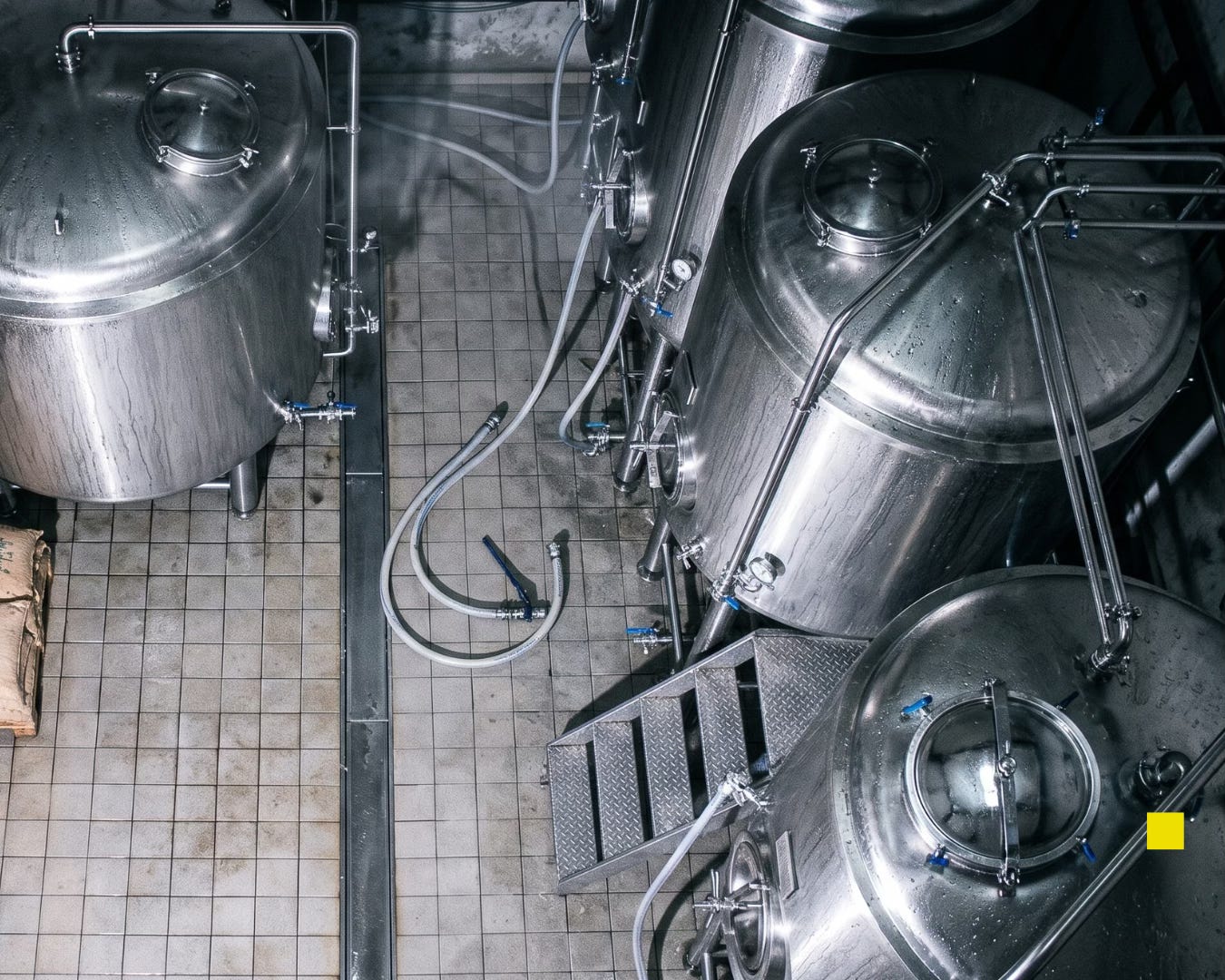
You’ll think I lifted this story from one of those craft breweries proud of staying small. Or, who knows, from the French monks who, in 2019, decided to cap the production of their liqueur. Chartreuse. In 2023, they wrote to their distributors: no more growth. “Growth for growth’s sake is nonsense for us,” said the president of the company that distributes it.
I wasn’t at any of those tables. But I can imagine the founders had to make other hard calls. I know because I’ve been a founder—and a co-founder—three times. I know what it is to scale, to crash, to bill a fortune, to bill nothing. And to keep going, because deep down you know you’re doing it right.
If this sounds a bit indie to you, think of those monks. Or the artisan sourdough in your local supermarket. I’m not romanticizing anything. There are many ways to grow, even if they only teach you one.
Choosing not to pasteurize your work comes at a price. And that brings me to me. To the ñ. To language. And to what’s happening to me right now.
I’ve written a book. You already know it.
Physics applied to systems. Brands as systems of human decisions. And prime identities.
The day before yesterday, I ran the 26,171 words of the Spanish manuscript through Pangram. According to Pangram, 8% of it is artificial intelligence.
Now zoom in.
Likely AI. Low confidence.
I’ve even got a ten-word fragment where 100% AI and low confidence in the diagnosis meet.
I’m cracking up.
It all goes into the same orange bag.
And look, a tool that works with probabilities having doubts — I think that’s fetén. It’s a bit like ISO 9001. You can have a perfectly documented process and still produce crap. Consistently.
What I find a lot less fetén is that the doubts lose their place the closer we get to the headline.
On top, a diagnosis. Below, the nuance.
And in between, my reputation.
It takes a stand. Well, one toe at a time.
And it doubts when it acquits me, too: my haiku, Likely human. Low.
I’d rather have quality of thought. Does it measure that too?
Substack and Pangram, together since July. And me, having a blast. Honestly. First in Spanish, then in English. I test one, I test the other. They never agree. And since what I love is observing, I observe. Systems.
So Substack wants authors. Just without authorship?
And then there’s Substack’s own auto-translation: I write in English, you read me in Spanish, and what comes out isn’t 100% me. Dios. Lay off the caffeine. Okay, back on track.
A month ago, in Prove you’re human, I wrote that in English I choose what’s “correct” because I don’t yet know the “incorrect” well enough to break it.
The scene at the start? I wrote it. In Spanish first, then in English. By hand. The first English version I tested — rougher than the one above — came back 100% AI.
The monks, the beer, or my own agri-shop project: a market stall, slow food and deli —because all slow food is deli— and a vegetable patch. That one too. That’s the traceability of my thinking. Maybe that’s why it doesn’t sting when it labels me AI. Or human. Or whatever. What hurts is every percentage point it adds. That hurts.
In case you didn't know, because apparently I never talk about it, I've written a book. And it matters to me. Joder. It matters because I might never be a mother, my dog is thirteen, and this might be my legacy.
What a Letter Costs was about the price of a letter. This is about the price of being believed. And the price of authorship.
And while writing this, I ran this very essay through Pangram.
Here we go.
I’ve given it another go. I’ve cut some fat. I’ve thought further in English. Maybe the cadence is different, Lines. Does this land the same way in other cultures? Or maybe I’m just obsessive about words. Which I am.
What I do know is that I was no less its author three drafts ago.
Let me tell you a story. In my book I talk about a very ugly name for a gorgeous phenomenon: the brachistochrone. It was a maths challenge, and Newton was among those who solved it. He apparently did it that same night and sent the answer unsigned. But Bernoulli, who had set the challenge, knew it was him. By the way he thought. By what I call his accent.
Tanquam ex ungue leonem. The lion, by its claw.
If you want to read something interesting, ask your assistant to tell you the story.
So, is Pangram the new admissions committee for people like me? People who make a living not from words, but from thought?
How fond we are of syllogisms: It’s AI. Therefore, there’s no original thought behind it. Therefore, there’s nothing worth reading.
—AI.
Scroll.
And there goes a potential client.
And that, amigo, could hit me in the pocket. Not because someone thinks I use AI—I do—but because someone might infer from a linguistic pattern that there’s no mind behind it. Or that the thought isn’t mine.
Here I am, spilling my life to you. I use AI, but not to rewrite me. I mix physics with basic chemistry with branding. Because we’re all systems. That’s my idea. That’s my connection. Does it come across? Is it accessible enough? I care that it lands. No? Then another round, Lines. I tighten the string. A violin string, to reach the B flat.
All of this made me wonder: am I writing for you? Or am I writing for whatever you’re using to judge me? Am I judging myself through a machine? What kind of heresy is this?
I observe systems. And their cracks. I’ve done it since I was a kid.
We no longer applaud because someone brave stepped forward and clapped first. We applaud because it’s the most probable thing to do.
A crack in our system?
I doubt myself sometimes, too.
I've been talking about this with people. And machines. And I've come to a conclusion: authorship is recognized by the accent of thought, not by the linguistic fingerprint. The lion is known by its claw.
I’m not hiding. I’m tremendously precise: thought alone, pulled taut with humans and non-humans. The last word, always mine.
Brands are systems of human decisions.
Until now.
P.S. Inside my book, in the English version, the same scene gets flagged. It wouldn’t travel well. AI. A mentor had told them the decision was a shot in the foot. AI.
Curioso.
Lines Aja
Brand Strategist & Verbal Identity Consultant — Las Musas®
weareprimos.com
Me gusta eso del acento del pensamiento, porque no atacamos una idea de la misma forma, ni usamos las mismas metáforas ni conexiones. Las ideas son como aire o agua, y las palabras son envases que le dan forma. La IA tiende a meter ideas distintas en envases muy similares, y de repente dos temas diferentes están explicados en el mismo orden y lo aborda todo igual. Eso se puede medir. Lo que no se mide es quién llenó el envase y con que.
Yo también la uso, y a veces la parte del texto que quedó sin intervenir la marca como IA. Una frase entera, por una coma. Y el porcentaje cambia si la revisas en días distintos.
Una petición ya lleva consigo una intención y un objetivo.