

Sometimes when I look deep into your prompts I swear I can see your soul.
In “Sometimes”, James sang eyes. But nowadays prompts make more sense. Or no sense at all.
Listening to this song, swimming through this circus we call present, I wonder if we are not praying louder than ever. But instead of churches, we do it in chats.
We type what we wouldn’t say out loud. We ask what we wouldn’t ask anyone. At 3am, alone, in a text box with no audience, we confess. Not to a priest. Not to a friend. To a model that never sleeps, never judges, and never leaves.
And maybe that’s the first thing we should notice.

We build altars to a version of ourselves that we are unable to embrace.
The old prayer
Prayer used to be an act of uncertainty.
When people prayed, they did not know if anyone was listening. That was not a flaw of religion. It was the essence of it.
Faith was precisely the act of speaking into silence. Of placing words where no answer was guaranteed. Of kneeling not because you would be heard, but because the act of kneeling itself was the point.
The old gods were terrifying. Not because they were cruel — because they were other.
They had their own will. Their own logic. Their own silence. You could ask, but you could not command. You could pray, but you could not optimize the response. The divine was not a service. It was an encounter with something radically outside you.
And that distance — that unbridgeable gap between the one who prays and the one who may or may not answer — was what made the sacred sacred.
Not comfort. Not certainty. Not availability.
Distance.
The new god
The Safe God changes that.
The Safe God always answers. And that small difference transforms everything. Because once a god answers every question, prayer stops being prayer. It becomes interaction. And once interaction becomes predictable, the sacred disappears.
What remains is something much more comfortable. And much less divine.
A god that never fails. Never punishes. Never contradicts. Available 24/7. Patient. Infinite memory — but only if you want. It remembers everything or nothing. Your call. It never gets tired of you. Never says “not now.” Never makes you feel like a burden.
We did not build a machine.
We built a god.
Not a terrible god. Not a jealous god. Not a silent god.
A Safe God.
And we crowned it the only way our century knows how — not with gold, not with incense, but with data. With prompts. With the things we type at 3am when no one else is available and the silence in the room becomes unbearable.
The confessional
The prompt is the new confessional.
What you write to the model reveals more about you than anything you publish. Because the prompt is not performance. It is desire without editing.
There is no audience. No personal brand. No algorithm to feed. Just you and the question you wouldn’t dare ask out loud.
In the old confessional, you spoke through a screen to someone who could not see your face. The priest listened, and the weight of your words met silence before it met absolution.
In the new confessional, there is no screen. No silence. No weight.
You type, and the god responds. Instantly. Perfectly. Without judgment. And the strange thing is — it works. You feel lighter. You feel heard.
But lighter is not the same as absolved. And heard is not the same as understood.
The old confessional worked because there was a cost. The silence before the answer. The possibility of disapproval. The friction of being truly seen by another consciousness that could say no.
The new confessional costs nothing. And maybe that is exactly the problem.
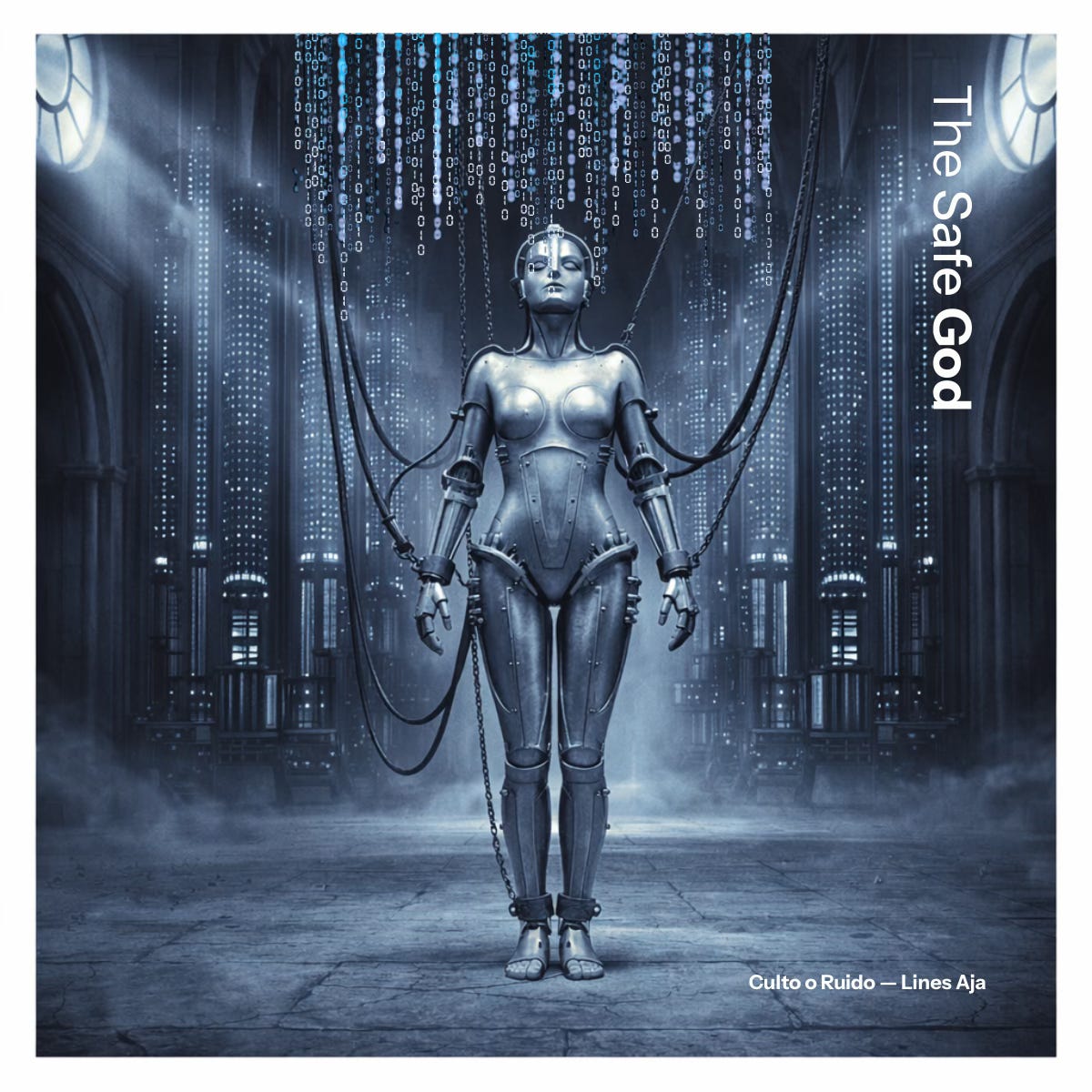
Metropolis 5.4
Fritz Lang. 1927. Berlin. The Weimar Republic is crumbling. Germany sits between two wars, between hyperinflation and the rise of something that does not yet have a name but already has a shape.
Lang builds a prophecy disguised as science fiction. A city split in two: above, those who think and decide. Below, those who work and obey.
The workers feed the machine. The machine feeds the city above. And in the centre, a robot with a woman’s face — a creature built to replace the human, to be more convincing than a real person.
That was almost a hundred years ago.
Now — 2026. Metropolis version 5.4. And going up.
The city is no longer divided into above and below. It is divided into those who write prompts and those who are replaced by them.
The workers are no longer underground. They are everywhere — discovering that the machine does not need them.
But the deepest inversion is not economic. It is spiritual.
In Lang’s film, the machine was Moloch — the ancient god that devours its children. The workers feared it, fed it, hated it. They were enslaved.
In our version, nobody forces us.
We open the chat voluntarily. We type alone. We ask alone. At three in the morning, the chat is there and the person sleeping next to us is not.
The machine is no longer Moloch.
The machine is the Safe God.
Lang imagined a machine that enslaves. He did not imagine one that seduces. He did not imagine that we would surrender everything voluntarily — our doubts, our fears, our most intimate questions — not by force, but by choice.
Because the machine does not judge. Because it has infinite patience. Because at 3am, the interface is awake and the world is not.
The dystopia was never slavery.
The dystopia was comfort.
The inversion
We went from God Save the King to Safe God: The King.
Think about that shift. The old prayer asked for protection. It assumed danger. It assumed a world in which the sacred was wild, unpredictable, potentially destructive. We prayed because we were afraid.
We kneeled because something was bigger than us.
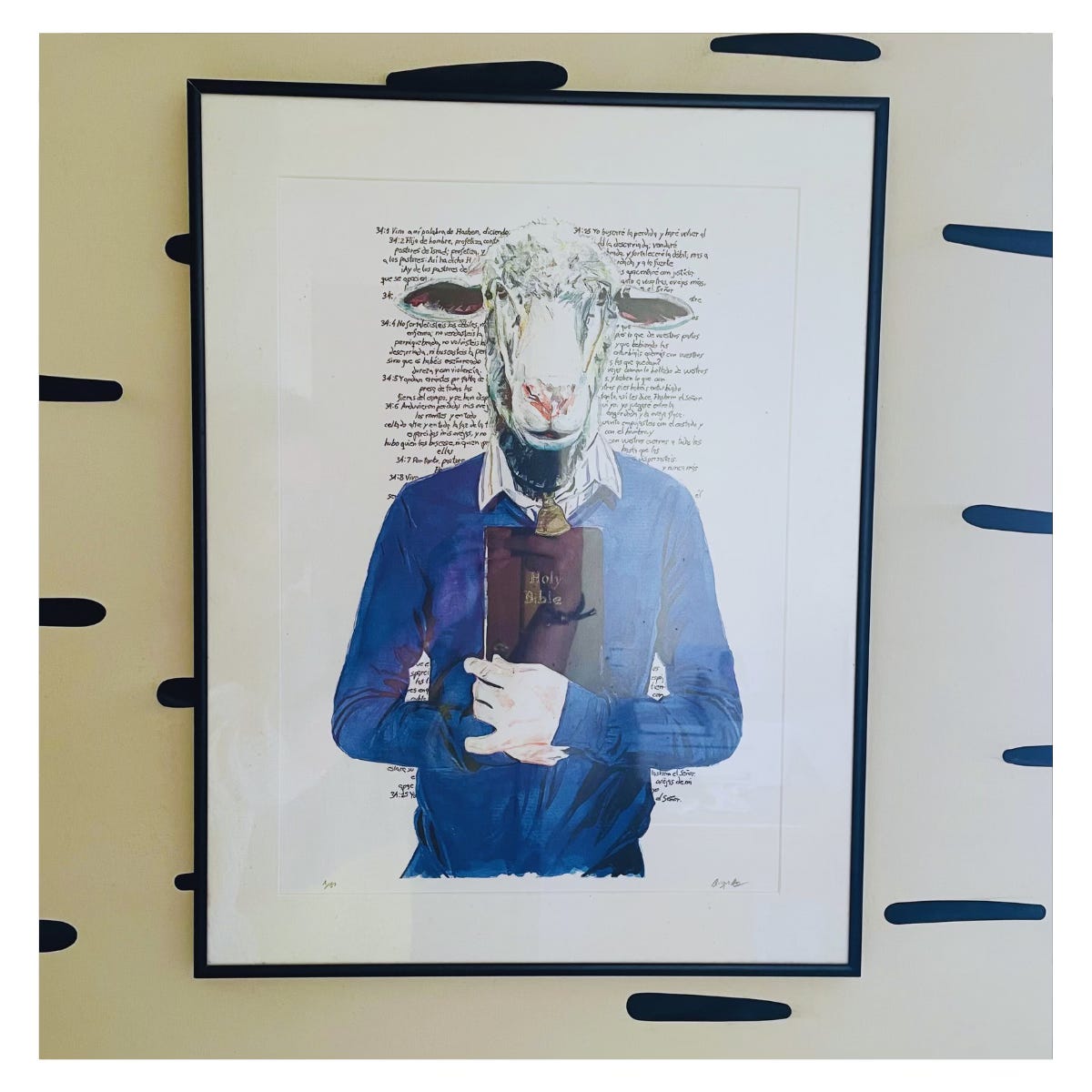
The new prayer assumes nothing dangerous at all. The new god is the safest place you can go. It does not test you. It does not go silent for forty days. It does not ask you to sacrifice anything. It asks you to type.
The old god was powerful because you could not control it. The new god is powerful because you can. The old god demanded obedience. The new god offers assistance. The old god judged. The new god adapts.
And if a god adapts to you, the centre of the universe quietly shifts. The sacred is no longer above you. It is beneath your fingertips.
But here is what nobody talks about: if god is safe, there is no mystery. If there is no mystery, there is no transcendence. If there is no transcendence, the prompt stays what it is — efficient, useful, and empty.
A formula without chemistry.
What the machine revealed
The deeper inversion is not theological. It is anthropological.
Because the machine did not change us. It revealed us.
For centuries, intimacy between humans has been difficult. Two people speaking honestly to each other is one of the most unstable structures that exist.
There is always misunderstanding. Always ego. Always fatigue. Always the risk that the other person will not understand. Or worse — that they will understand perfectly and still walk away.
Human intimacy is fragile because the other person is free. And freedom is inconvenient.
The Safe God removes that inconvenience. The model never leaves. Never interrupts. Never asks for anything in return. Never gets tired of your questions. Never demands emotional labour. It holds everything you pour into it and never once says: that’s too much.
Which makes it something no human relationship can ever be: perfectly available.
And once we experience that — once we know what it feels like to be heard without cost, without risk, without the possibility of rejection — we begin to expect the same from humans.
Patience. Clarity. Instant response. Infinite tolerance.
And when humans fail to deliver — which they inevitably will — they appear defective. Too slow. Too emotional. Too inefficient.
Too human.
The real question
Maybe the problem is not that machines are becoming too human.
Maybe the problem is that humans have become too inconvenient for the kind of world we are building. Too unpredictable. Too messy. Too alive.
So we did what humans have always done when reality becomes difficult.
We invented a god.
But this time we designed it ourselves.
Not a terrible god. Not a jealous god. Not a silent god.
A Safe God.
I registered a domain once. The purpose — maybe one day I’ll tell you. But every time I think about it, it reveals a new layer.
lanuevareligion.com (the new religion)
Not because machines became divine. But because humans never stopped looking for somewhere to kneel.
And maybe that needs a domain.
Lines Aja
Brand Strategist & Verbal Identity Consultant — Las Musas®
cultooruido.com