


fiuuuuuuuuuuu
The sharpener. The sharpenerrrrrr. The sharpener has come to your door. Right there, at your gate. Knives to sharpen.
The sharpener, at your very doorstep.
fiuuuuuuuuuuu
I don’t know if you know that sound where you come from.
The sharpener would arrive on a motorbike or a bicycle. You didn’t see him first. You felt him. A thin whistle that slipped under the door, climbed up your spine and settled behind your eyes before your brain had time to name it.
By the time you turned your head, your body had already decided.
You’d grab the scissors, the knife that wouldn’t cut, whatever had lost its edge around the house. You’d do it without blinking. Instinctively. Because your body already knew what to do before your brain caught up.

fiuuuuuuuuuuu
Hold that whistle. We’ll come back to it.
A friend confessed to me the other day that she’s a reggaeton fan. But in the closet.
Her playlist is indie. Curated. Intelligent.
Reggaeton, next to it, looks like a stain on the record. Like playing it out loud, no headphones, would put her in a box labelled in permanent marker: immature, no taste, too easy to like.
At first it made me laugh, because I’ve been listening to reggaeton since before I knew it was called reggaeton. I enjoy an evening at the opera just as much as I enjoy a sunrise dripping with sweat in the afterparty.
Maybe that’s why the story stayed with me. Because I realised my friend’s issue wasn’t a dissonance caused by a trained musical ear.
It wasn’t about taste at all. It was shame.
You could hear it in the way she lowered her voice when she said it. Like she was admitting to something slightly dirty. Something that, if said too loud, might make her less serious in someone else’s eyes.
Taste looks at the work.
Shame, on the other hand, looks first to see who’s watching. And depending on who that is, it says out loud: “I’m not one of them.”
It dresses up as class. Even if saying it means denying yourself and building a closet to the measure of your prejudices.
And I get it.
The signalling around reggaeton is obvious. After all, it’s the devil’s music with shitty lyrics — according to the experts of the Royal Academy of Good Musical Taste.
And if by now you still think this is about reggaeton, this is about something else.
It’s about who holds the power to decide whether what you feel is legitimate or not. About who gets to tell you whether what you feel deserves to take up space out loud, or should stay in the back room, headphones on, door shut.
It’s about that uncomfortable zone where something moves you before you can justify it. Before you can defend it with a citation, a review, an award, an institution, or a respectable enough lineage.
Because the funniest thing is, even those experts, the ones who hate the genre with all their might, get their bones moving when a track comes on.
They do. Even if their intellect shakes its head to deny that movement.
Don’t raise that eyebrow — this isn’t me talking. It’s science.

In 2021, neurosurgeon Jesús Martín-Fernández and his team put twenty-eight people with no musical training into a functional MRI scanner and played them fragments of four genres: classical, reggaeton, electronic and folk.
The study used only instrumental fragments. Not a single word. Naked.
They measured what lit up.
The result?
Reggaeton was, of the four, the one that most activated the auditory-motor network. Reggaeton. Not a symphony.
But that wasn’t what stopped the team cold.
What left them open-mouthed was something else: even with the body completely still, reggaeton lit up the basal ganglia. The oldest thing we carry inside us. The structures that read rhythm and start predicting the beat before a single muscle moves.
Because the stimulus is so rhythmic, so persistent, that the brain begins to anticipate when the next beat will drop. And when it does, the body is already braced to move. No movement yet. Just the readiness.
It doesn’t pass through the cortex where good taste is debated and criteria are signed off.
It processes downstairs. In the basement. In the mechanisms we share with those who danced around fires before the word “fire” existed.
The body prepares to move before you decide to move. Before you have time to judge whether that movement is legitimate or not. Before you analyse anything.
Are you surprised?
Good. Now let’s see what happens when you put the right words to that rhythm.

Puerto Rico. September 2017. Hurricane Maria devastates the island.
The government declares that the number of deaths from that catastrophe stands at 64.
64.
In mid-2018, a Harvard study is published in the New England Journal of Medicine. It analyses excess deaths between September 20 and December 31, 2017, in Puerto Rico.
The figure: 4,645.
When the news breaks, people start placing empty shoes in the square in front of the Capitol. In three days, they leave more than three thousand pairs.
Two systems. Two ways of measuring reality.
And a cemetery of shoes.
Months pass. Nothing happens. Nothing. Until, suddenly, everything explodes.
July 2019.
889 pages of a private Telegram chat are leaked.
Inside, the Governor of Puerto Rico, Ricardo Rosselló, and eleven of his top officials exchange thousands of messages. Jokes. And something else. Something that opens a wound that never quite closed.
In that chat, the participants mock the dead of Hurricane Maria.
The leak spreads like wildfire. The streets move from disbelief to outrage. And that’s when three people decide to get together and lock themselves in a studio to record a track.
In less than twelve hours, they record and mix it.
René Pérez Joglar — Residente — put the verb to the accusation. Verse by verse, he described corruption with the precision of someone who’s been sharpening that blade for years.
Benito Antonio — Bad Bunny — stopped his European tour and stepped into the mud in the name of a generation: the “I won’t be pushed around” generation.
And Ileana Cabrera — iLe — who, in her own words, had been waiting her whole life for a moment like this, provided the hook: the chorus that turned rage into something singable, repeatable, chantable.
On the morning of July 17th, just as the streets were beginning to fill again, they drop the song for free on YouTube.
Afilando los cuchillos. Sharpening knives.
A song that doesn’t open with a beat. It opens with a whistle.
Yes. That whistle.
The sharpener’s whistle.
fiuuuuuuuuuuu
When they released the song, they didn’t have to explain a thing. The island already knew the code.
Just as I recognise it, or anyone who’s ever heard that whistle.

On July 22nd, between eight hundred thousand and a million people filled the widest highway in San Juan, the Expreso Las Américas.
Nearly a third of the island’s population moving.
Motorbikes patrolling at night. Black flags. Cooking pots. Perreo in the face of tear gas. A crowd moving before it could even fully explain itself. Like someone reaching for the scissors when they hear the whistle, before they understand what they’re doing.
Twelve days after the first protest in front of La Fortaleza, Rosselló capitulated. It was midnight on July 24th. Never before — not under Spanish rule, not under American rule — had a governor of Puerto Rico been ousted by direct street pressure.
That night, a governor fell. And an illusion too: the illusion that history changes when someone convinces others with arguments.
Sometimes history is rewritten when you manage to synchronise enough bodies at once. Sometimes all you need is for a whistle to stop being domestic.
There is always something that puts you in the closet. Something that makes the box seat wrinkle its nose.
Before, it was the blues. Jazz. Hip hop. Rock. Camarón’s flamenco. The Beatles.
Everything that once smelled of “this has enough standing to be one of mine”. Until, suddenly, it does.
And then it happens.
What was demonized starts being accepted across the board. And the cultural arbiters look you straight in the eye, place a hand solemnly on their chest, and say:
“Respectability is this. You can now press play on that song, contemplate that sculpture, read that book. That movement and the smile it brings to your face — they are now legitimate. Endorsed. Certified. Your experience is authorised.”
The box seat always arrives late. Five minutes late, deliberately.
Long enough for risk and judgment to disappear. Long enough for the rhythm and the narrative to sync up.
Although your basal ganglia knew it first.
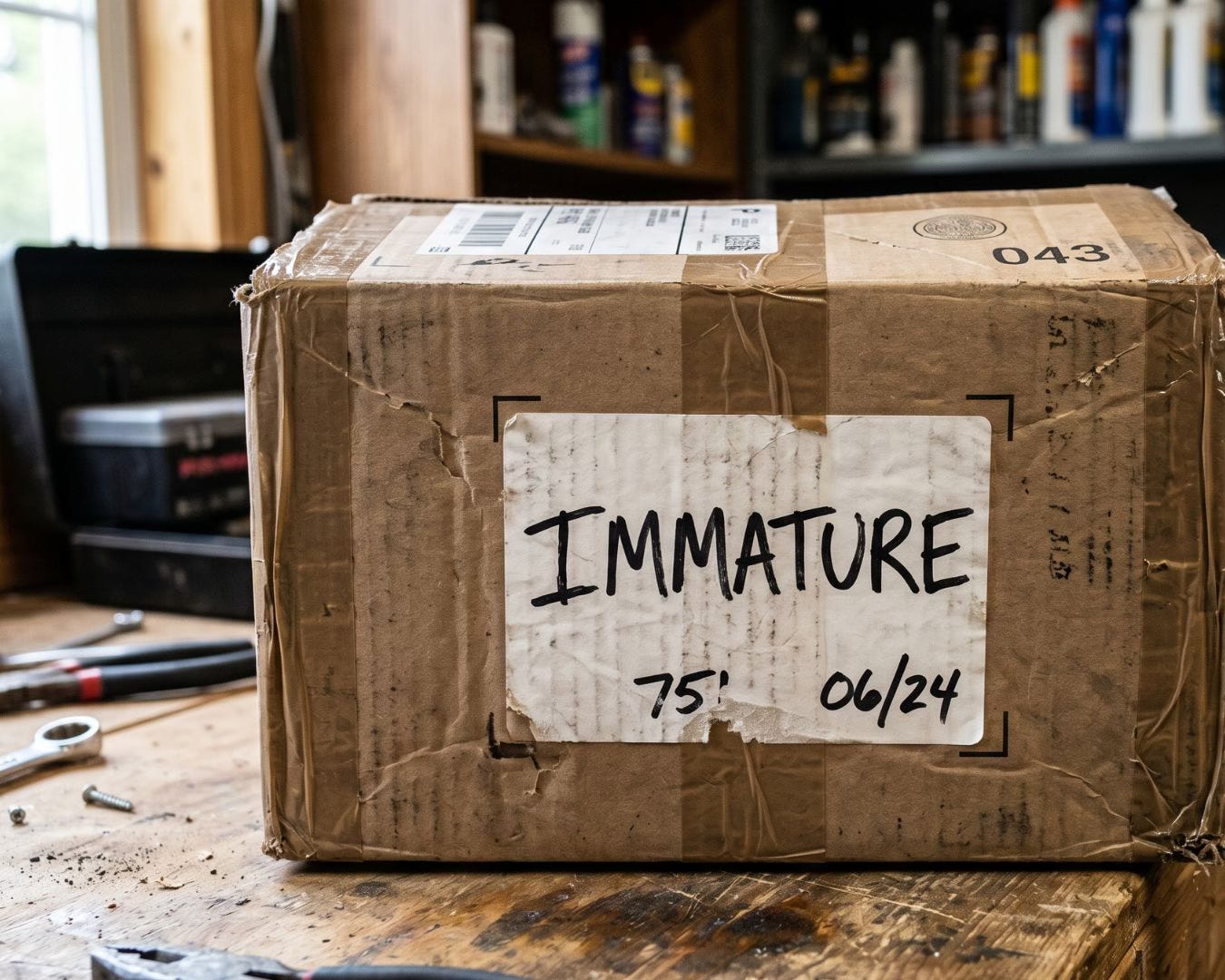
The tribunal always appears.
The box seat. The class. The category.
The little voice that doesn’t ask “what is this doing to me?” but “what does it say about me that this is happening?”.
The body doesn’t wait for permission. It never did.
But sometimes you feel you need someone with cultural authority to allow what moves you.
Purists. Pedigree. The pulpit.
Someone to confirm that you’re not losing value in front of everyone else when the beat drops and your body moves. When your head turns at the whistle.
That kind of knowledge has no certificate. It doesn’t need it.
It has the pulse that lives beneath.
fiuuuuuuuuuuu
Lines Aja
Brand Strategist & Verbal Identity Consultant — Las Musas®
cultooruido.com