

I loved organic chemistry. I can’t remember a single formula.
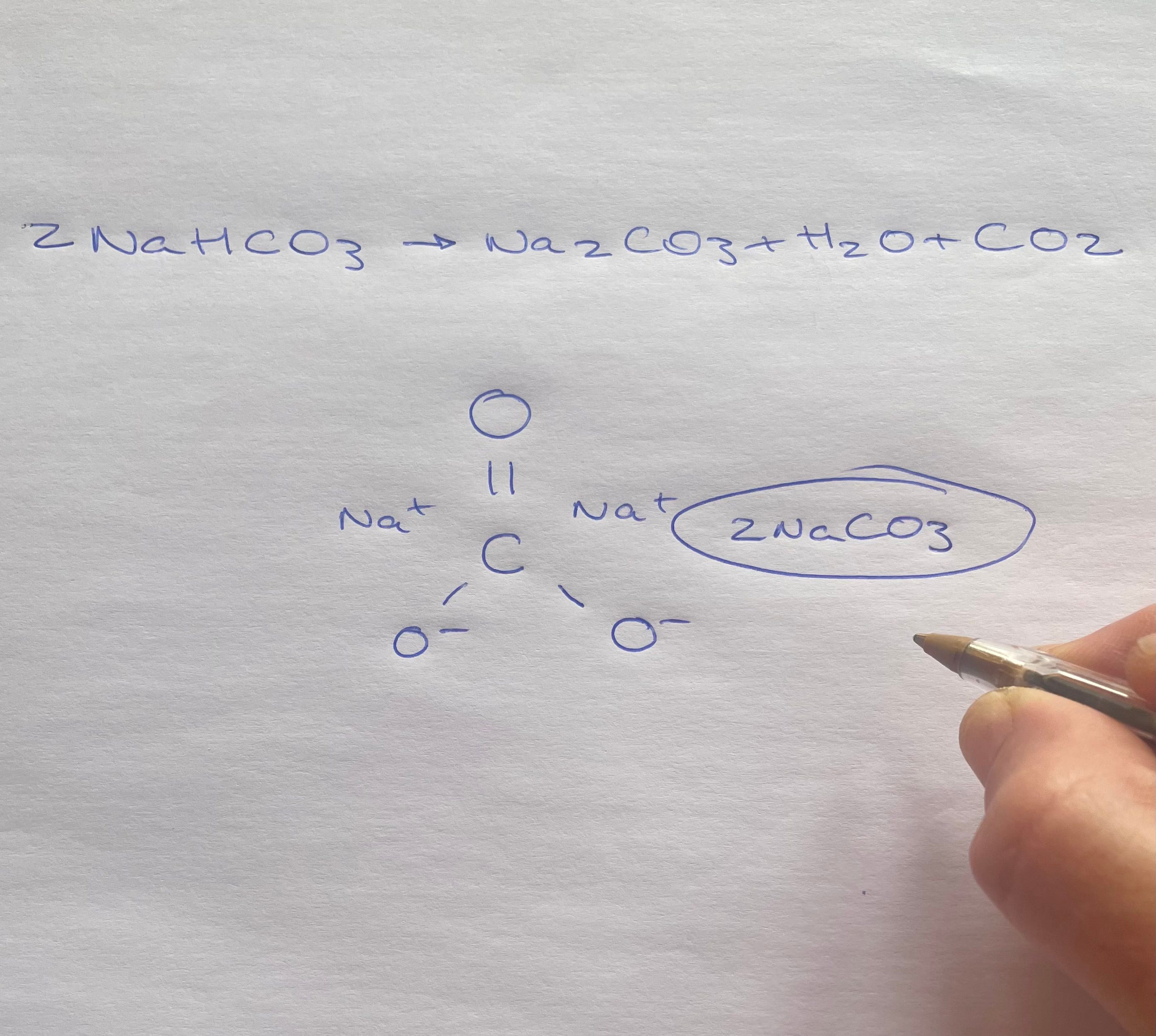
Not one. Not the molecular structure of sodium carbonate, not the chains I used to draw with something close to pleasure. The notation is gone. All of it. And I don’t think that’s failure — I think that’s evidence.
Because what I do remember is the force behind the loss of an electron. The moment an atom cedes something — not as damage, not as subtraction — but as the move that makes it available for bonding. Sodium doesn’t lose an electron. It positions itself. It becomes ionic. It becomes structurally ready for a relationship that couldn’t exist while it was holding on to everything.
That stayed. The formulas didn’t.
And the difference between what stayed and what left is the entire problem.
When you’re a child, they push knowledge into you with a shoehorn. Tributaries of the Ebro. Visigoth kings. Molecular formulas presented as sequences to retain, not as forces to understand. You memorize the output of a reaction without ever feeling the reaction itself. You learn the shape of knowledge without touching its weight.
Now we do the same thing — at scale, at speed, with better tools.
We accumulate posts. Prompts. Inherited strategies. Frameworks someone else built for a problem we never sat with long enough to feel. We stack and stack, and we call it learning. We call it growth. Sometimes we even call it strategy.
But accumulation is not sovereignty.
Sovereignty doesn’t come from how much you carry. It comes from how clearly you can think when you’re carrying nothing. It’s the ability to operate from a position — not just about one. The difference between knowing the formula and understanding the bond.
I keep thinking about prompts. The way people collect them now — like recipes, like cheat codes. “Give me a prompt for positioning.” “Give me a prompt for brand voice.” As if a prompt were a tool.
A prompt is not a tool. A prompt is an instruction that only works if you already have the territory clear. Without territory, a prompt is a formula without comprehension. It’s a formula without chemistry. It produces output. It doesn’t produce meaning.
This is the same logic that made us memorize the tributaries of the Ebro. The same operating system: accumulate enough, and competence will follow. Gather the right inputs, and the right output is guaranteed. It’s efficient. It scales. And it produces a very specific kind of blindness.
The blindness of someone who can recite the map but can’t feel the terrain.
There’s a word I keep returning to: friction.
Friction is what most systems are designed to eliminate. Smooth onboarding. Frictionless experience. Seamless integration. We’ve turned the absence of friction into a value proposition.
But friction is not resistance. Friction is traction.
Without it, you slide. You accumulate velocity with no direction. You move fast and touch nothing. You produce and produce without ever metabolizing — and what doesn’t get metabolized doesn’t become structure. It becomes weight.
The education I received was frictionless in the worst way: information without confrontation, data without tension, knowledge that never required me to become anything in order to hold it. You could carry it all and remain exactly who you were before.
Real learning changes the carrier. That’s the friction. That’s the cost. And that’s what makes it sovereign.
I think we’re building a generation that confuses access with understanding.
Access to information. Access to tools. Access to frameworks, templates, strategies, even to intelligence itself — outsourced, on-demand, by the prompt. And none of it requires you to metabolize anything. None of it asks you to sit with the discomfort of not knowing. None of it demands friction.
So we accumulate.
We accumulate because it feels like progress. Because the pile grows and the pile is visible and visibility is the closest thing we have to proof. But the pile is not the person. The archive is not the mind. The prompt library is not the territory.
Sovereignty is what remains when you subtract the pile.
It’s the thing you can think from — not the things you’ve thought about.
I didn’t remember the formula for sodium carbonate. I remembered the feeling of not understanding it. And that feeling — that gap, that friction — taught me more about how knowledge works than the formula ever did.
The tributaries of the Ebro are gone. But I know what a river does when it meets resistance.
It doesn’t accumulate. It carves.
Lines Aja
Brand Strategist & Verbal Identity Consultant — Las Musas®
cultooruido.com
Me gusta mucho el concepto de fricción. Yo suelo pensar que gracias a la fricción también percibimos una caricia. Quizá por eso eliminarla en todos lados, en todo momento, termina siendo un error.
Pero también me pregunto si no estamos en un camino difícil de detener. Pienso en los inuit, que podían pasar días sin dormir ni comer para acercarse lo suficiente a un caribú. Hoy usan rifle y GPS. Es lógico: el riesgo era enorme. Pero en ese proceso también se pierden capacidades, como orientarse por el viento o las corrientes de aire.
La pregunta entonces es hasta dónde eliminar la fricción. Qué grado de incomodidad sigue siendo necesario. Porque aunque nuestra vida ya no sea tan física, seguimos buscando fricción de otras maneras: correr, ir al gimnasio, ayunar.
Parece que necesitamos cierta resistencia para sentir que estamos realmente en el mundo. La diferencia es que ahora muchas veces es una fricción elegida, no impuesta.
Supongo que la cuestión es elegir bien dónde queremos esa fricción. Porque aunque a veces nos frene, también es lo que nos impulsa.