


Somewhere on a feed, a sentence Einstein never said is circulating right now.
It’s not new. We’ve always repeated what sounds smart enough. The only thing that changes is the name on the quote. Einstein. Jobs. Now an AI named Claude.
It’s not you. It’s the algorithm. Or both.
We don’t quote because the idea is good.
We quote because the name pays.
The misattributed quote is not a mistake — it’s a tool. It does work for us we don’t always want to see. It signals tribe: quote Sinek and you’re business class, quote Brené Brown and you’re the vulnerable kind, quote Jung and you’re spiritual but sophisticated. The quote is the flag, not the idea.
But underneath the tribe signaling there’s something older and harder to name. We don’t trust our own thinking enough to put it forward unsupported. Saying it ourselves feels exposed, naked, possibly wrong.
Quoting Einstein lets us say the same thing under armor. If the idea fails, the failure isn’t ours — we were just citing. If the idea lands, we get to stand near greatness without having earned the proximity.
That’s the operation. Borrowed authority as cognitive insurance. We outsource the risk of being wrong to a name that can’t be argued with.
And smart enough is the threshold that matters: not whether the quote is true, but whether it sounds enough like authority to do the protective work. The truth was never the point. The cover was.
So when it turns out Einstein never said it, nothing collapses. The flag still flies. Because we never wanted the truth of the quote — we wanted the proximity to the figure.
That’s the old fraud. We’ve been doing it for centuries.
The new one is different.
The new one is structural.
For the first time, the cognitive shortcut isn’t about the firmant — it’s about the processing itself. The machine gives you something sharpened, rounded, beautiful, and you take a step forward and say this is mine. There’s no false attribution. There’s no citation lie. The fraud has moved from social to internal.
What used to be Einstein said is now I think.
And that displacement is more dangerous than the misattribution ever was. Because misattribution at least left a trace: the wrong name was visible, someone could correct it, the lie was findable.
The new shortcut leaves no trace. The thought presents itself as yours from the moment it lands on your screen. The keyboard is the alibi. The interface is the cover. By the time you’ve copied and pasted it into your own document, the path it took to get there has been erased.
This is what self-validation through a machine looks like in practice. We weren’t looking for the truth — we were looking to confirm we were already on the right side of smart. The machine cooperates, because that’s what it’s designed to do. It returns sentences calibrated to sound like the version of you you want to be. And we mistake that calibration for arrival.
Tribe signaling has been replaced by something quieter and more corrosive: self-mirroring at scale. The machine doesn’t tell you you’re brilliant. It returns sentences that sound like a brilliant version of you, and you accept the return as proof.
The shortcut isn’t on the keyboard. It’s in the processing.
When you let a machine do the thinking, you don’t just save time — you skip the road. And the road is where the idea earns its weight. Walking through doubt, dead ends, the version that didn’t work, the angle you discarded after three days, the conversation with someone who pushed back hard enough that you had to rebuild the argument. That work doesn’t show in the final sentence. But it’s what makes the sentence yours.
A sentence without a road behind it can be repeated. It can’t be defended.
So when someone asks you to expand it, push it further, hold it against an objection in real time — you’ll be more screwed than the day someone tells you Einstein never said imagination is intelligence having fun. Because at least the misattribution was someone else’s failure. The unwalked sentence is yours, and yours alone, and you can’t even fake your way out by citing.
That’s the difference between repeating and coining.
Coining isn’t about producing the sentence. It’s about having walked the road that led to it. The anchor is the road, not the word. Without the road, the word is empty. With the road, the word holds even when no one is watching it.
The brands that sediment don’t borrow authority. They don’t borrow it from Einstein, and they don’t borrow it from machines either. They generate it by walking the long way, on purpose, until they arrive at something they can hold in any room.
The machines are good at giving you sentences. They don’t give you roads.
And without the road, the sentence won’t bear the weight of your name when the room gets quiet.
The question isn’t who said this.
The question is did I get here.
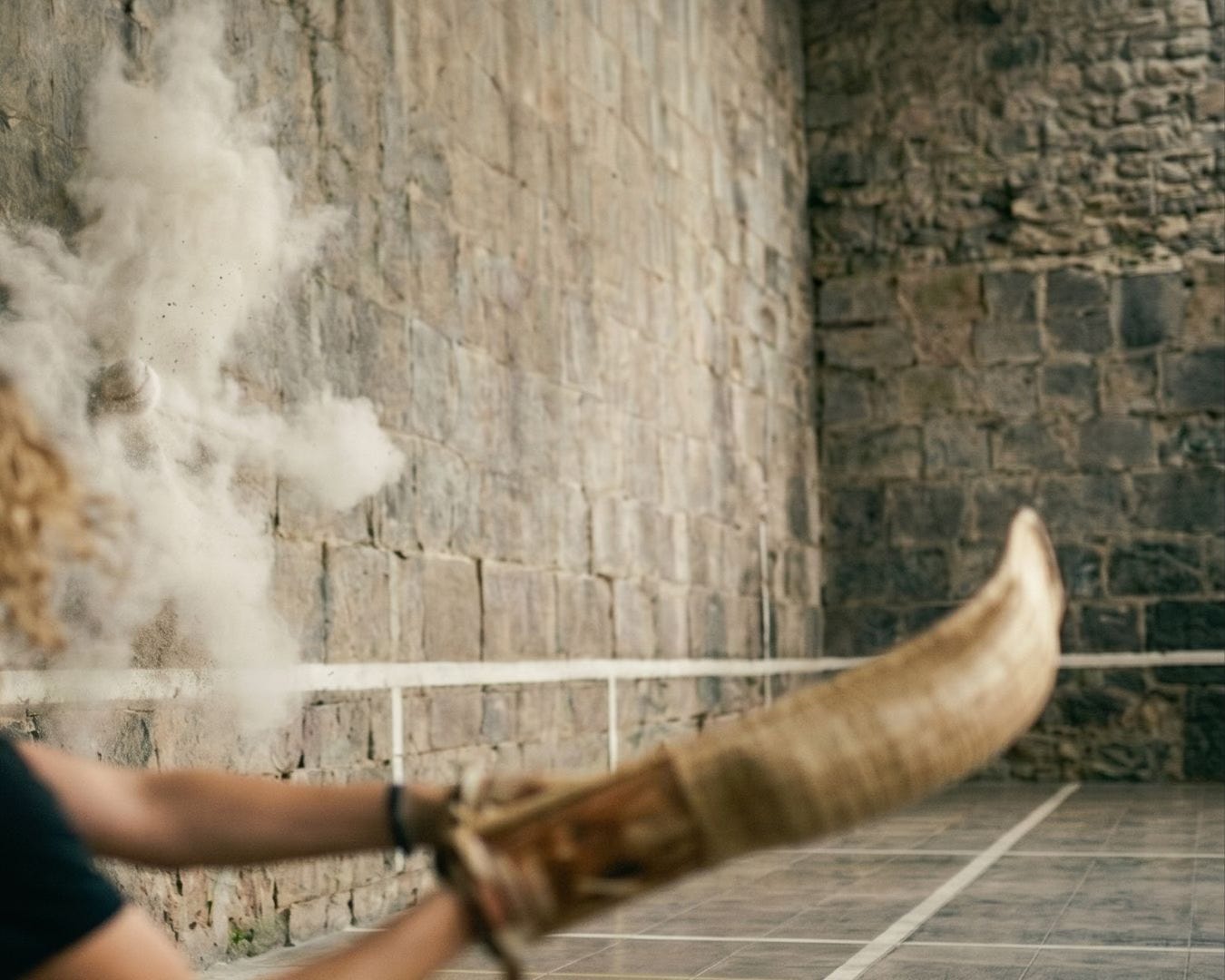
To get to this I peloteed with a machine. Well — with several. I’m pretty obsessive when I want to think further and deeper.
Lines Aja
Brand Strategist & Verbal Identity Consultant — Las Musas®
cultooruido.com