


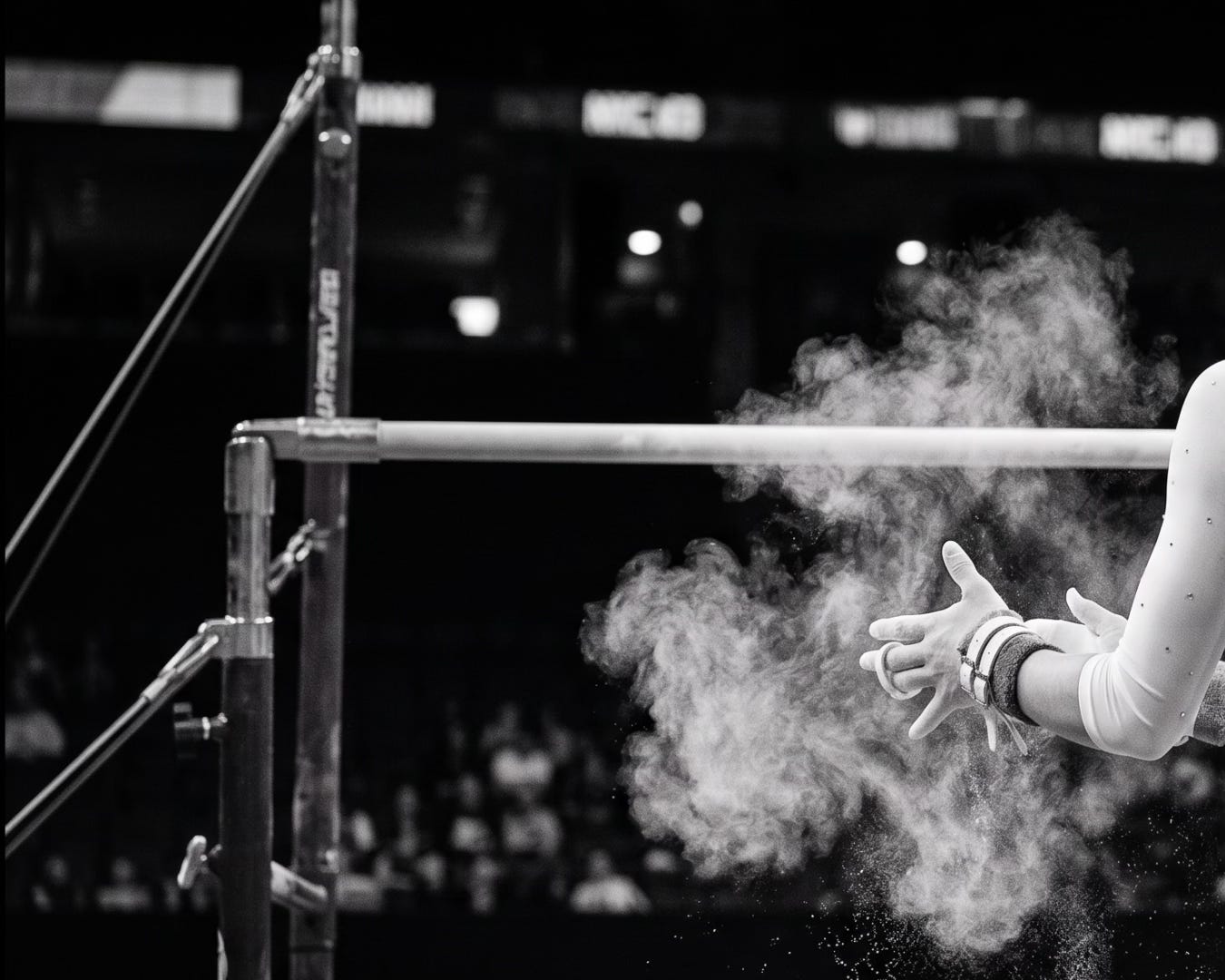
Montreal, July 18, 1976. First day of competition.
A fourteen-year-old girl steps up to the uneven bars. She’s four foot eleven. Eighty-six pounds. White leotard with three stripes. The arena is full.
The judges score according to a system that contemplates 10 as the maximum mark. The 10 is executing your own routine, with precision. Yours. The one only you can execute.
The simple fact of climbing onto those two uneven bars — because they are uneven, because they are at different heights, because the exercise consists of moving from one to the other without falling — is already the exercise.
The girl executes. Dismounts.
And waits.
The judges score 10. What they saw was a 10, and the rule said 10, so they put 10.
The scoreboard shows 1.00.
The camera holds still. The arena holds still. And the girl holds still.
Zoom in on Nadia waiting. Fourteen years old. White leotard. Looking at the scoreboard that says 1.00 without flinching. Not because she doesn’t understand. Because she already does. She knows what she just did. The infrastructure will catch up later. That isn’t her problem.
The judges weren’t wrong. They scored what they saw. But the scoreboard, didn’t contemplate what the rule did permit. It showed 1.00 because it didn’t know how to show 10.
That’s what happens when something executes outside the frame the system was designed for. The frame doesn’t break. It keeps showing the minimum, because that’s the only thing it knows how to do.
Nadia Comaneci didn’t celebrate. Didn’t cry. Didn’t ask them to change the scoreboard. She stepped off the apparatus and moved on. She already knew what she had done.
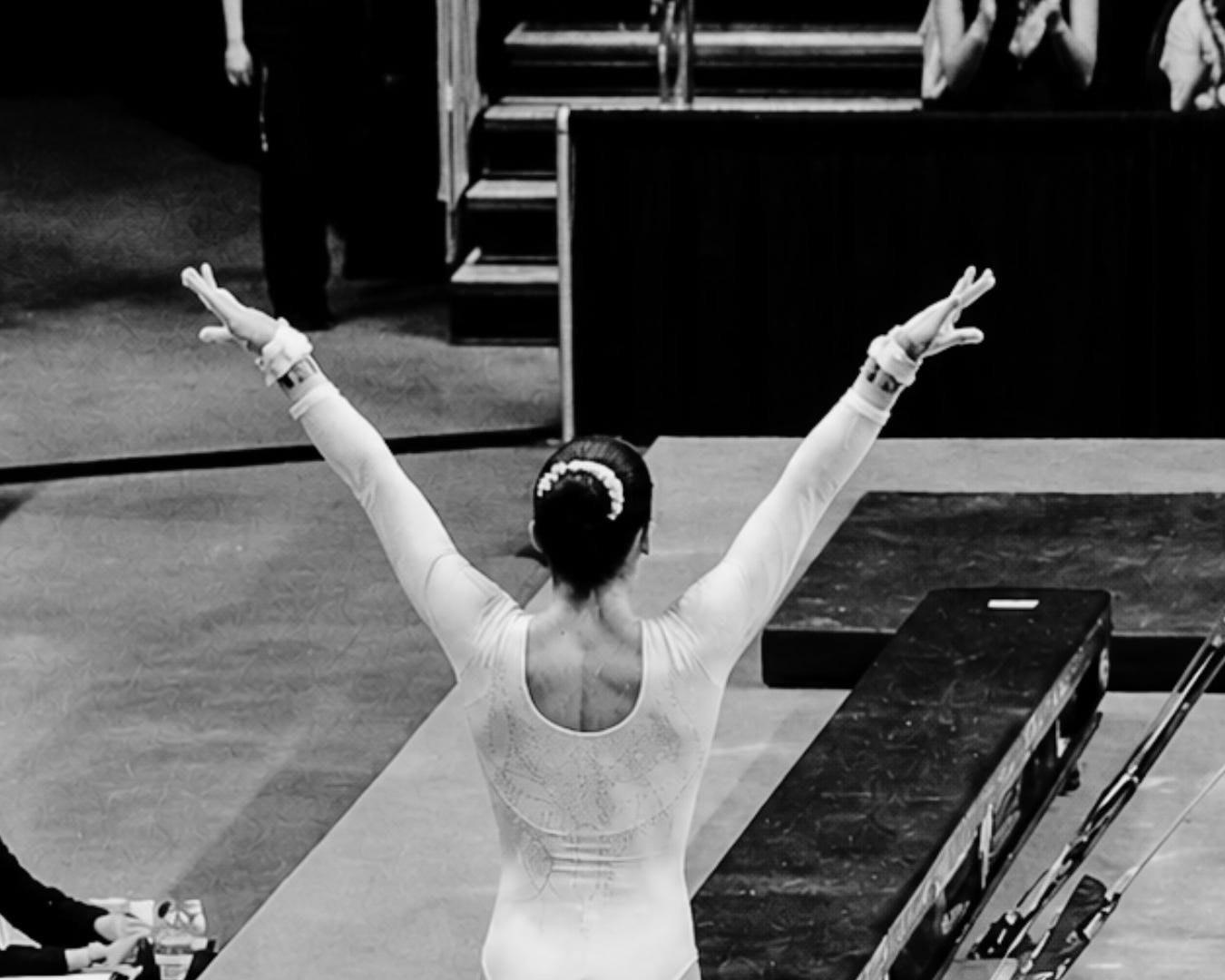
Fifty years later, there are people who see the image of the 1.00 and stop there. They don’t look at what came before. They don’t look at what came after. Much less do they ask why.
And the why begins with two questions.
Who is giving you the score?
What do you do with that score?
In 1976, Nadia’s judges were people sitting at a table. The rule said 10. The infrastructure only went to 9.99. Between what the rule permitted and what the infrastructure displayed, there was a gap. In that gap, Nadia executed.
For a brand, for decades, the judges were the market. The people who pay, who come back, who recommend, who don’t. An imperfect but legible system — if you executed well and had access to your audience, the score arrived. Sooner or later, but it arrived.
Now the judges come in two layers. And the second one decides before the first.
The market is still there. Still paying, returning, recommending. But before the market can judge anything, there is another judge that decides whether the market sees you. That judge is the algorithm. And the algorithm doesn’t judge what you do — it judges whether what you do fits the shape of the pipe through which it distributes.
It isn’t a critic. It’s a plumber.
It doesn’t decide if your brand is good. It decides where the water runs. The rule — the market — contemplates recognition. The infrastructure — the algorithm — didn’t contemplate it. The judges would score you correctly. The plumbing doesn’t know how to carry it.
That isn’t censorship. Censorship at least identifies you as a threat. This is plumbing: the system doesn’t see you as a problem, it sees you as background noise. And background noise doesn’t get distributed.
That’s why the scoreboard shows 1.00. Not because someone judged your execution and found it wanting. But because the infrastructure between your execution and the market does not contemplate what the rule would have permitted to recognize.

I see people who are Nadia and break down because the scoreboard shows them 1.00.
Not because their execution failed. The scoreboard failed. But the scoreboard is the only thing they see, and so they start operating as if the problem were the execution.
They get impatient. They get frustrated. They start touching what shouldn’t be touched.
They drain themselves on operational tactics — more posts, more frequency, more hooks, more hashtags, more A/B testing the headline, more pivoting the message, more optimizing the feed. All the energy goes down to the level of the plumbing, trying to convince the pipe to let them through. Meanwhile the cold head and the strategy stand to one side, waiting for the panic attack to pass.
In ‘76, the silence between the execution and the scoreboard lasted a few seconds. Today that silence can last quarters. And that’s where most brands don’t break because of the scoreboard. They break by looking at it.
Message and frequency are not the same thing.
The message is distributed — it enters the pipe, travels through the plumbing, arrives or doesn’t. Frequency is recognized.
That’s why there are brands the scoreboard shows as 1.00 and that nevertheless have readers, clients, interlocutors who find them. Their message, when it arrives — or when it gets found — lands.
And here is where the film gets interesting. The audience, even though the scoreboard stays stuck, vibrates. Just like when Nadia executed.
There are brands that see the 1.00 and break. There are brands that see the 1.00 and start optimizing. And there are brands that see the 1.00 and keep going.
Not because they don’t see it. Because they already understood what it is.
The 10 was never the goal. The 10 is what the system says is the ceiling, but the system measures execution within the frame it knows how to measure. What you execute — if you execute your own, with precision, with conviction intact — does not fit inside that frame. That’s why the scoreboard jams.
That’s why the plumbing doesn’t carry it. Not because you’re less. Because you’re something else.
And then the operation isn’t to chase the 10.
Nadia style.
You don’t go for the ten. The plumbing isn’t ready to give it to you.
You go for the eleven.
The 11 isn’t given to you by the scoreboard. You give it to yourself. Every time the camera zooms in.
Lines Aja
Brand Strategist & Verbal Identity Consultant — Las Musas
cultooruido.com