

Some ideas taste bad the first time.
Not bad as in wrong. Bad as in unripe.
They scrape the tongue. They tighten something behind your ears. They pull that face a kid makes when biting a plum too soon. And the first thing you want to do is spit them out.
Sometimes we do. Almost always.
Then, months later, someone says something close. But red now. Sweet. Bright. We get it right away and think: damn, good idea.
Yeah.
Could’ve been ours.
Some people think good ideas arrive finished.
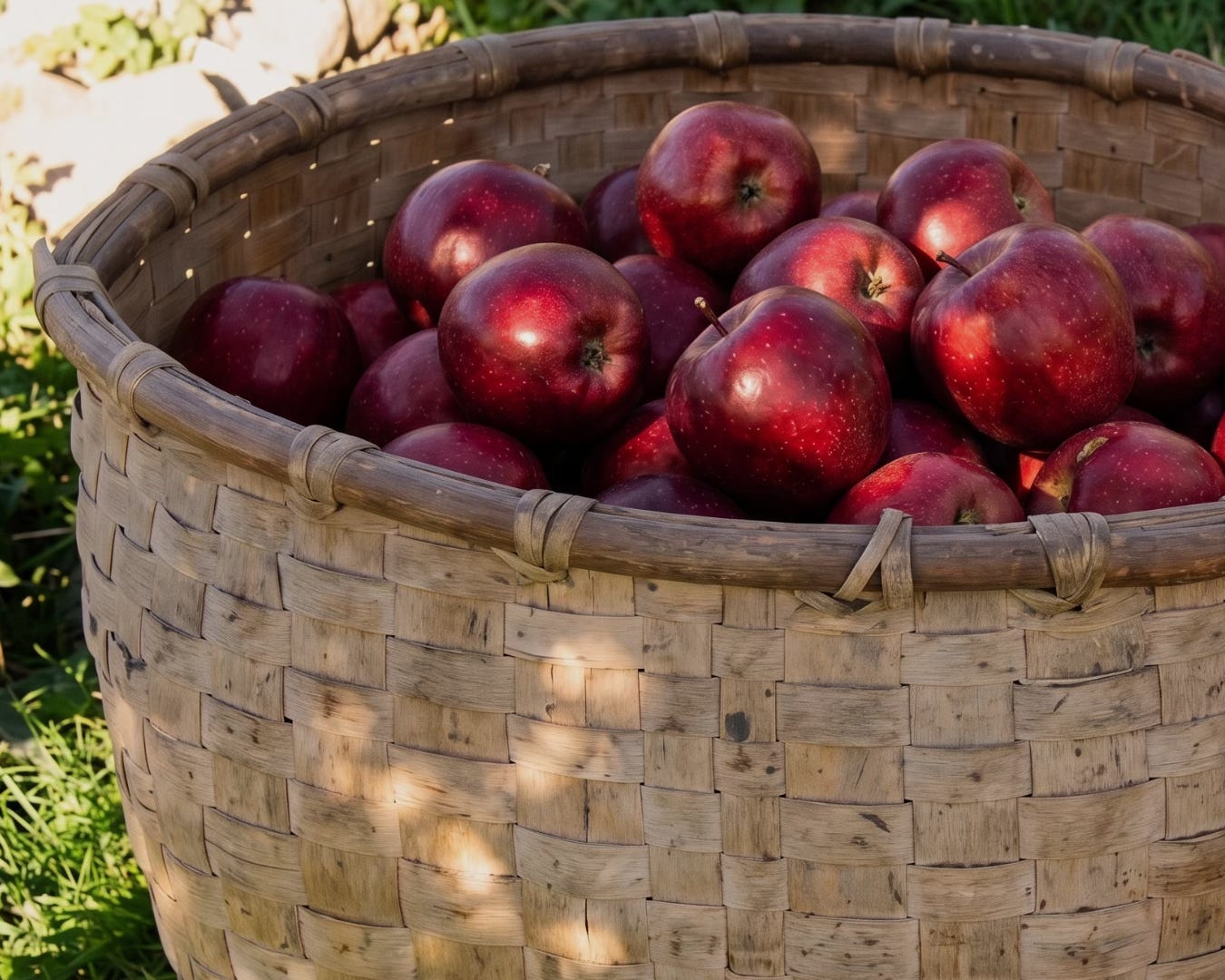
Ripe, red, gleaming. The apple that drops into your lap while you nap under the tree.
The ones I remember came sour. Awkward. A little ugly. With that edge where you think maybe they weren’t much after all, and at the same time something in your gut won’t let you throw them out.
That something is a pain in your ass.
Because now you have to stay. To stop.
And we’re badly built for stopping.
We’ve grown used to the now. To asking an idea to prove, from day one, everything it might become. To answer for itself before it grows. To bring ROI, storytelling and a well-tied pair of booties so it can take those first steps.
If not, next.
And now that you can ask for an idea and get it back in ten seconds: round, red, ready to eat…
Who resists?
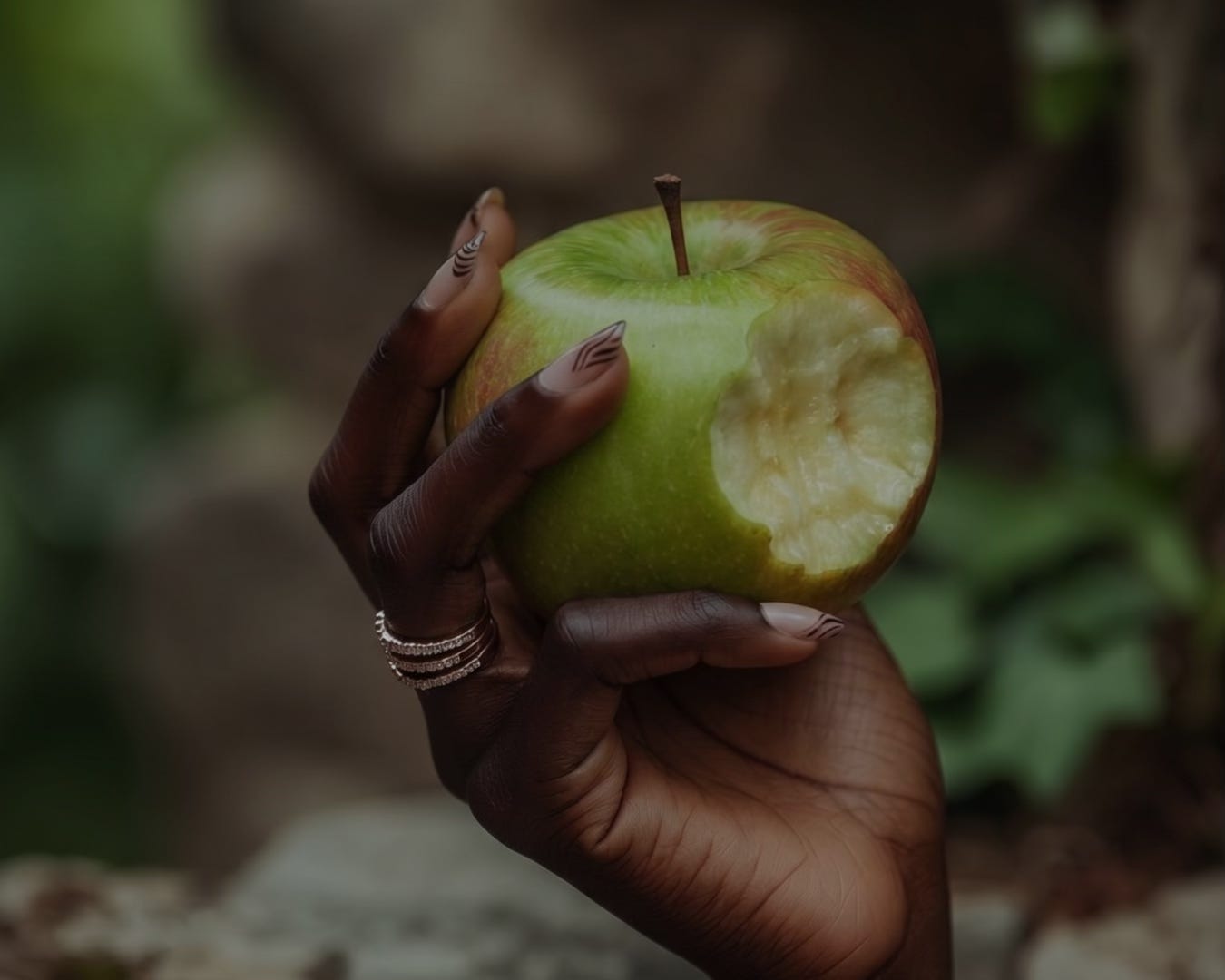
Go on, laugh at Eve and that bite of hers.
Everyone’s tree. Heavy with ripe fruit.
The problem with always eating sweet is that the palate goes dull.
We learn to distrust anything that scrapes. To spit out the sour before we know what it could’ve become.
The feed shifts it. And the algorithm blesses it.
So on a diet of likes, or the lack of them, there comes a point where nobody needs to take the green idea from you anymore.
You spit it out yourself.
And I’m telling you this because I think with machines. Several. Every day. A lot. And they’re extraordinarily good at taking me to the center.
That’s why I use them. I want to know where it is.
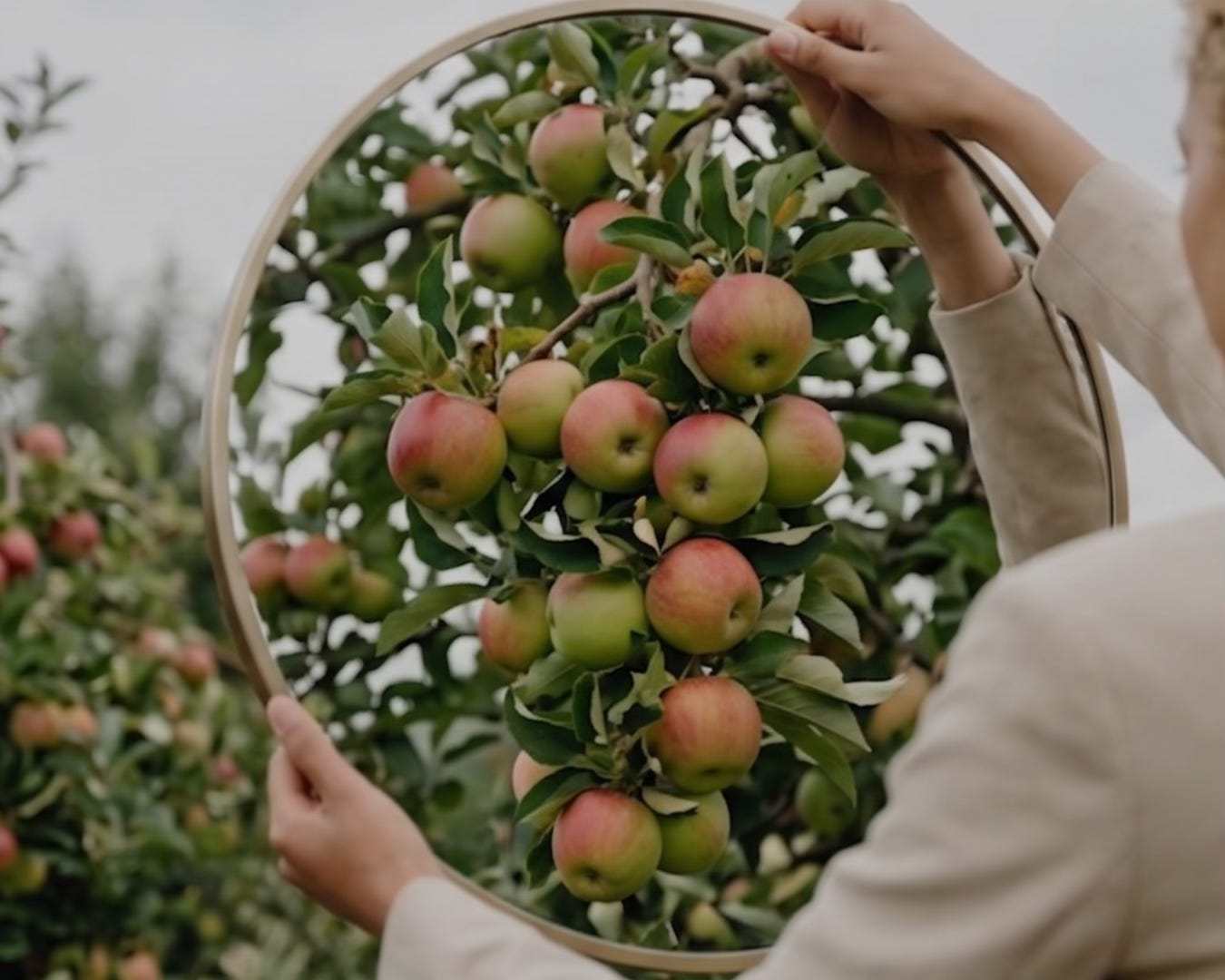
I want to see the probable answer. The word that comes next. The idea that statistically has every ticket to look like a good idea.
To rule it out.
Because the machine has no problem with ideas. It has a problem with ideas that don’t look like an idea yet. It reads noise where you, with luck, feel a prick.
And lately I chew on that prick a lot. Because it’s getting harder to feel.
More and more I see the same apple with a different sticker. The same post with a different profile photo. The same brand with a different naming. The same round little idea showing up on time to a conversation that started months ago.
Take it, and you’re not creative — you’re punctual.
And that punctuality worries me. Worries me that we reward it so much.
The machine doesn’t take the green idea from you. It just doesn’t fit its statistics. So it nudges you — kind words, kid gloves — toward the ripe.
The probable.
And the probable, when it’s everyone’s bet, is worth nothing. It turns into a place too common.
At rush hour.
Strategy doesn’t start with an answer.
It starts well before. With a question and the awkward silence it leaves behind. That stretch where you still don’t know. Where there’s no line. No concept. No three creative territories on a slide with their matching moodboards.
There’s a gap.
And the gap makes people nervous.
So we fill it. With the first idea that passes. With something that worked once. With an answer that sounds like an answer. Anything rather than admit we’ve spent three days staring at a green apple with no clue yet what the hell to do with it.
So the problem isn’t that the machine thinks for you. It’s that it takes you, gently, to the place where everyone already is. And a brand that reaches the place where everyone already is arrives late, even if it arrives first.
We think creating is about having ideas.
And it is.
The thing is, what costs — the heavy lifting — is bearing them. Living with an idea that’s still uncomfortable long enough not to kill it trying to make it presentable.
Not dressing it up. Not simplifying it. Not swapping it for another that shines sooner just because it shines.
Because some ideas need you not to understand them yet.
They need to sit badly a while. They need you to carry them in your pocket, take them out, turn them over again, forget them two days and find them again looking back at you from the table.
Training the palate for the sour is training judgment.
It’s not patience. It’s not about enjoying what scrapes. It’s about knowing why it scrapes. Telling a bad idea from a green one.
Knowing green isn’t worse than red.
It’s before.
And maybe strategy is exactly that: knowing what not to spit on the floor yet.
Lines Aja
Brand Strategist & Verbal Identity Consultant — Las Musas®
cultooruido.com