

In design, everyone understands negative space. The air around the object defines the object. In luxury, it’s non-negotiable — the absence is the actor, the restraint is the signal, the margin is what tells you this isn’t for everyone. No one questions that.
In music, the pause gives the note its meaning. A rest is not a gap — it’s architecture.
But in verbal identity?
We fill everything. Every gap is a missed opportunity, every silence a slot in the content calendar left empty. The brand must speak, must post, must respond, must have a take. Always on. Always saying something.
No one ever asks: what if the most strategic thing your brand can do right now is say nothing?
Every verbal identity manual tells you what to say. Tone of voice, do’s and don’ts, messaging pillars, key phrases. The architecture of speaking is well documented.
But no manual tells you when to shut up.
When to let a statement land without a follow-up. When not to respond. Which battles to fight and which to let pass. What questions to leave unanswered — not out of negligence, but out of precision.
That layer doesn’t exist. And it should. Because silence is not the absence of strategy.
It’s the sharpest expression of it.
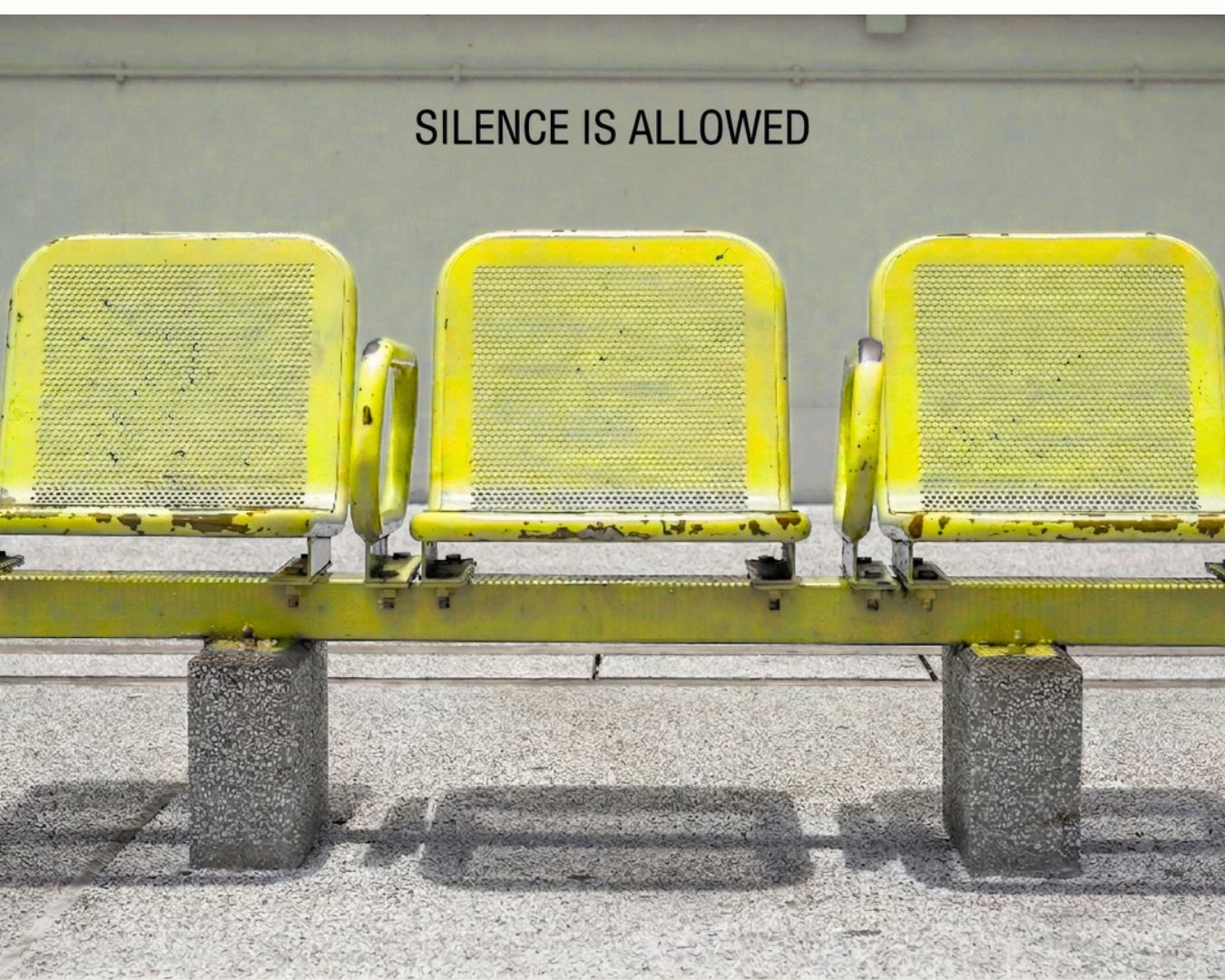
The noise trap
Watch what happens when a brand has no silence strategy. It jumps on the latest trend. It borrows whatever word is in season — essence, taste as currency, intentional living, whatever sounds like depth. It replicates. It responds to every comment, every critique, every shift in the wind.
It never asks itself: what if I stay quiet, for once?
Not quiet as in absent. Quiet as in: speak once, and hold the silence you leave behind.
Think about the last rebranding everybody talked about. A legacy brand launches a new identity — the crowd reacts, the brand explains, justifies, adds context, responds. More noise on top of noise. The silence they couldn’t hold became louder than anything they said.
The brands that survive those moments are not the ones with better answers. They’re the ones with the discipline to not answer at all.
Before we name the types
Something needs to be clear. Silence is not an editorial decision. It’s a governance one.
What a brand chooses not to say is not managed by the content team. It’s defined at the level of identity, power, and consequence.
Because silence is where a brand proves whether it is led — or just reacting. If your silence changes depending on the pressure of the moment, you have a mood, not a strategy. And moods don’t scale. They leak.
Three silences
There are three kinds of brand silence. None of them are in the manual.
The first is silence as resistance. Not responding to the noise. Not jumping on the trend. Not justifying a decision that was already made. This silence says: we know who we are, and we don’t need your approval to keep being it.
The second is silence as weight. When what you say carries enough truth that it doesn’t need repetition. It doesn’t need a carousel, a thread, a follow-up post. It was said once. It holds. It sustains itself over time. That kind of silence is not empty — it’s full. It’s the space a sentence leaves when it doesn’t need company.
The third is silence broken. Because sometimes shutting up is cowardice. Sometimes the brand needs to speak — not the safe, politically correct statement, but the real position. The one that costs something. The silence that matters most is the one you choose to end, despite the fear.
What no manual includes
Verbal identity systems are built for expression. They tell you how to sound, what words to use, what register fits each channel. They’re engineering for output.
But no one engineers the pause. No section in the manual says: here is when you don’t post. Here is the crisis you let pass without a statement. Here is the trend you watch from the window without opening the door. Here is the opinion you hold privately because saying it publicly would dilute, not strengthen, who you are.
That’s not a gap in the document. That’s a gap in how the industry thinks about verbal identity. We’ve confused having a voice with using it constantly. But the brands that stay — the ones that sediment, that become reference, that people return to — are the ones that understood something simple:
It’s not what you say. It’s the silence you’re able to hold. Because silence is power — it forces the other side to fill the space if they want to reach you. And that changes everything: who leads the conversation, who sets the terms, and who decides when it’s worth breaking the quiet.
The next time you build a brand, don’t just ask what it should say. Ask what it should never say. And ask what silence it needs to be able to hold.

Lines Aja
Brand Strategist & Verbal Identity Consultant — Las Musas®
cultooruido.com
Como es habitual cuando te leo, me asaltan fragmentos de cosas que vi, leí o viví. Hoy no es distinto.
Me llevas a una escena de Moneyball. El personaje de Jonah Hill está preocupado por qué decir, cómo responder a las críticas, y Brad Pitt, como Billy Beane, le dice algo así como: “¿te preocupa responder? Entonces no lo hagas”.
Estaban cambiando la forma de gestionar un equipo. Explicarlo habría sido interminable. Era mejor sostener el rumbo, confiar en el sistema y dejar que la evidencia, con el tiempo, fuera apagando el ruido.