

My friend Irene turned 50 this weekend. 50 springs, as we say in Spain.
We threw her a surprise party. Thirty people, a parallel WhatsApp group and all of us crossing our fingers that nobody would fuck it up at the last minute.
The theme was songs by one of her favorite singers, and the place was one of our local bowling alleys. Nothing like the American ones. This one overlooks the beach, the cape and the estuary. Gorgeous.
One of the best things was the cake.
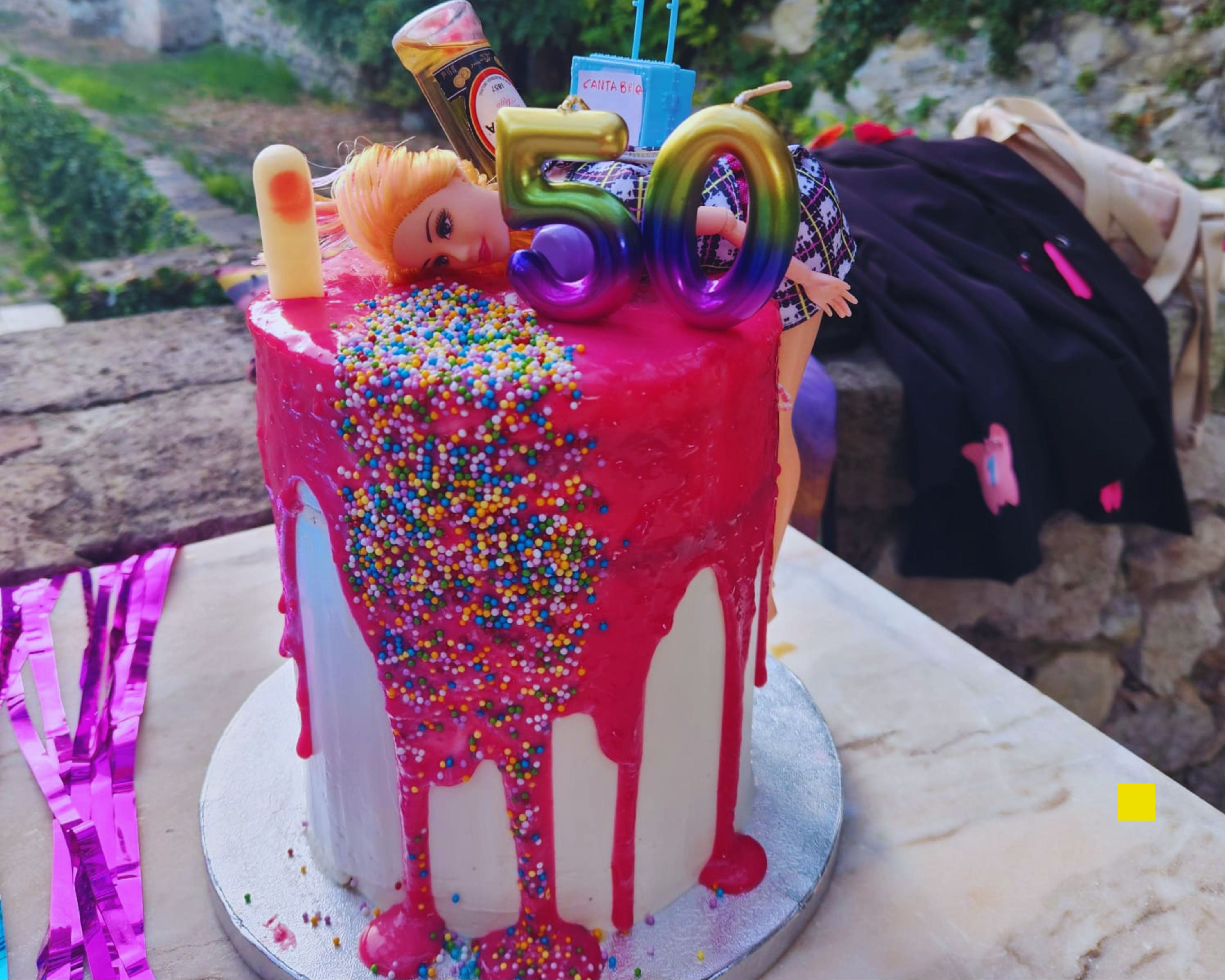
Pink. Very pink. With an iridescent 50, a lipstick and a Barbie sprawled across the top after vomiting confetti. I don’t really know how else to describe it because that’s exactly what it was: confetti vomit.
The party brought together people from different parts of her life. Some family, ex-partners, friends, people who have known her for years and people who came along later. Each of us knows a part of Irene.
There was good food and, in my case, a little calimocho to help with digestion. Calimocho is sangria for adults: red crianza wine, three ice cubes and a good cola. Happiness in a wide glass.
At some point between the afternoon and God knows what time, looking around at all those people, I thought that maybe getting older is also this. Being in a room full of people who know you and realising none of them knows exactly the same you.
One person’s Irene isn’t quite the same as the next person’s. There are shared stories, different times, places, conversations, things that remain under seal and things that are public knowledge.
And well, something similar happens with brands.
I could talk to you about the Ship of Theseus here.
But I’d rather talk to you about my friend Irene.
I’ve been working with a brand that’s turning 60.
Ten years older than Irene and, as far as I know, with less calimocho.
When a brand has been around that long, people know it from different places too.
Some have bought it all their lives. Others have just discovered it. Some work there. Some remember a product that doesn’t even exist anymore.
There’s a lot of history in front of you. And the first temptation is to think the answer must be buried somewhere in it. So you go through a ton of documentation. You ask what things feel “very us” and get different answers depending on who’s sitting in front of you.
Normal.
If I’d asked on Friday what is “very Irene”, I’d probably have come home with thirty different answers too. But I bet the same points would keep crossing, like a spiderweb.
Same thing with a 60-year-old brand.
I don’t care about finding the point in its history when it was supposedly more itself. Or deciding which period should become the reference for the next ones. I want to understand what we still recognise when everything else has changed.
Because 60 years give you plenty of time to change.
Yes. Please. Thank you.
Sometimes we treat a brand’s history as a list of things we need to keep safe. This? Check. That? In. Those? Of course.
Probably because we’re afraid of touching something and finding out later that that was important.
...Shit.
But thinking about this brand and Irene, nobody at that party knew exactly the Irene the person next to them. And still, we all recognized her.
I don’t think she’s the same today as she was twenty, ten or five years ago either. That’d be more boring than queueing at the supermarket checkout.
And still, there we were. Thirty people celebrating the same Irene.
Maybe when you work with a brand that’s been around for ages, you don’t have to decide which version to preserve. We're not making marmalade here.
Maybe the harder thing is letting it keep changing and, ten years from now, still being able to say:
Yes, it’s her.
Even if she’s wearing a different lipstick. Even if her playlist has got longer. Even if she’s changed her mind about this or that.
In the end, the confetti always lands in the same place.
Lines Aja
Brand Strategist & Verbal Identity Consultant — Las Musas
cultooruido.com